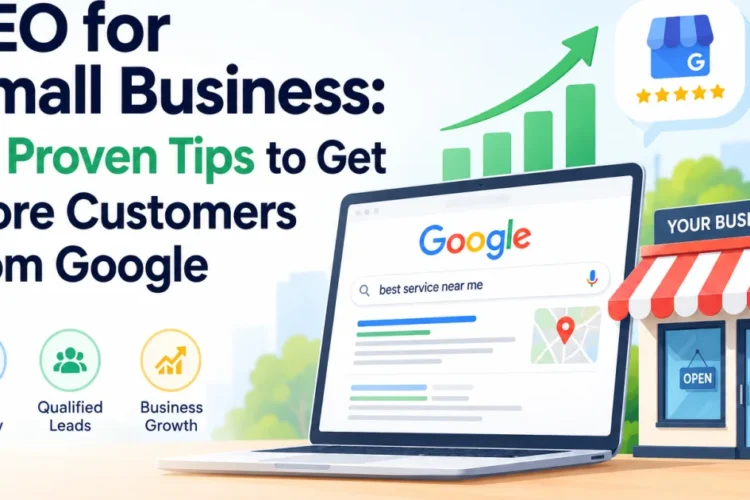



Every day, millions of people search Google for products and services. If your business isn’t appearing on the first page of search results, you’re losing potential customers to competitors.
The good news is that with the right SEO strategy, even small businesses can compete with larger companies and attract highly targeted traffic without spending thousands on paid advertising.
What Is SEO and Why Does It Matter?
Search Engine Optimization (SEO) is the process of improving your website’s visibility in search engines like Google. The goal is simple: rank higher, attract more visitors, and generate more leads.
Unlike paid advertising, SEO provides long-term benefits. Once your pages rank well, they can continue generating traffic for months or even years.
Step 1: Target the Right Keywords
Keyword research is the foundation of every successful SEO campaign.
Before creating content, identify what your potential customers are searching for.
Examples:
- SEO services
- Digital marketing agency
- Link building services
- Local SEO company
- Website design services
Focus on keywords with strong search intent rather than simply chasing high search volume.
Step 2: Create High-Quality Content
Google rewards websites that provide useful, relevant, and original content.
When creating blog posts:
- Answer common customer questions
- Write comprehensive guides
- Use clear headings and subheadings
- Include examples and actionable tips
- Keep content updated
The more value you provide, the more likely your content will rank and attract backlinks.
Step 3: Optimize On-Page SEO
Every page should be optimized for both users and search engines.
Key on-page SEO elements include:
Title Tags
Your title should contain the primary keyword and encourage clicks.
Example:
Professional SEO Services for Business Growth
Meta Descriptions
Write compelling descriptions that summarize the page and include target keywords.
Header Structure
Use:
- H1 for the main title
- H2 for major sections
- H3 for supporting topics
This helps search engines understand your content structure.
Step 4: Build Authority with Backlinks
Backlinks remain one of Google’s most important ranking factors.
A backlink from a trusted website acts as a vote of confidence for your content.
Effective backlink strategies include:
- Guest posting
- Digital PR
- Resource page outreach
- Industry partnerships
- High-quality content marketing
Focus on relevance and authority rather than quantity.
Step 5: Improve Website Speed
Website speed directly affects user experience and search rankings.
To improve performance:
- Compress images
- Enable caching
- Use fast hosting
- Minimize unnecessary plugins
- Optimize code
A faster website often results in better rankings and higher conversion rates.
Step 6: Optimize for Mobile Users
Google uses mobile-first indexing, meaning it primarily evaluates the mobile version of your website.
Your website should:
- Load quickly on smartphones
- Be easy to navigate
- Display properly on all screen sizes
- Have readable text without zooming
A poor mobile experience can significantly impact rankings.
Step 7: Focus on Local SEO
If you serve a local market, local SEO is essential.
Optimize your:
- Google Business Profile
- Business directories
- Location pages
- Customer reviews
Local SEO helps businesses appear in Google Maps and location-based searches.
Step 8: Monitor and Improve Performance
SEO is an ongoing process.
Track:
- Organic traffic
- Keyword rankings
- Bounce rate
- Conversion rate
- Backlink growth
Regular analysis helps identify opportunities and improve results over time.
Common SEO Mistakes to Avoid
Many businesses fail because they:
- Buy spam backlinks
- Publish low-quality content
- Ignore technical SEO
- Neglect mobile optimization
- Fail to update existing pages
Avoiding these mistakes can save months of lost rankings and traffic.
Why SEO Is Still the Best Long-Term Marketing Investment
Paid advertising stops generating traffic when your budget runs out.
SEO continues working around the clock.
A strong SEO strategy can:
- Generate consistent leads
- Increase brand awareness
- Build trust and authority
- Reduce customer acquisition costs
- Deliver long-term business growth
For most businesses, SEO provides one of the highest returns on investment in digital marketing.
Final Thoughts
SEO is not about tricking Google. It’s about creating the best possible experience for your users while helping search engines understand your content.
Businesses that invest in quality content, technical optimization, and authoritative backlinks will continue to outperform competitors and generate sustainable organic growth.
Start implementing these SEO strategies today, and you’ll be building a stronger online presence that delivers results for years to come.