
Having a website is no longer enough to attract customers online. With millions of businesses competing for attention in Google Search, companies need a clear strategy to improve visibility, attract relevant visitors, and turn organic traffic into leads and sales.
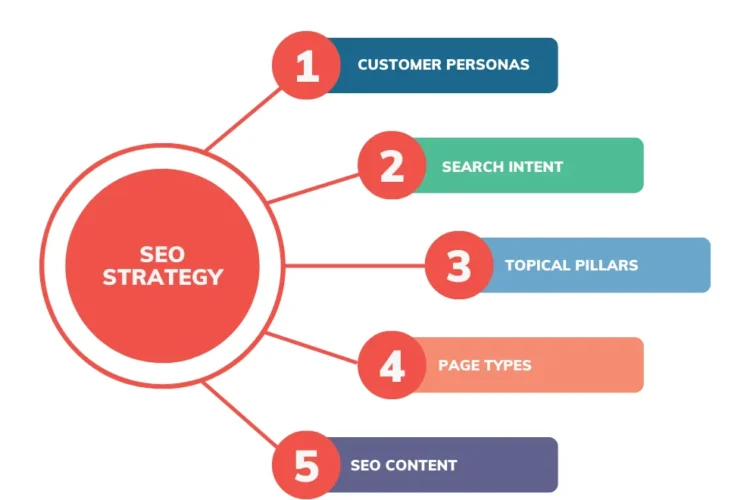
Search engine optimization (SEO) combines technical improvements, useful content, keyword targeting, internal linking, website optimization, and authority building. Google explains that SEO helps search engines understand your content and helps people discover relevant pages through search.
In this guide, we’ll look at practical ways businesses can improve their website visibility and build a stronger online presence.
1. Start With the Right Keywords
Keyword research is the foundation of an effective SEO campaign.
Instead of targeting only extremely broad keywords such as “marketing” or “web design,” identify specific searches that potential customers are likely to use.
For example:
- SEO agency
- SEO services for small businesses
- website design services
- local SEO services
- PPC marketing agency
- digital marketing company
- backlink services
The best keywords are not necessarily those with the highest search volume. Relevance and search intent are equally important.
A keyword that attracts 100 highly relevant potential customers can be more valuable than a keyword that attracts thousands of visitors who have no interest in your services.
2. Create Helpful Content
Publishing useful content gives your website more opportunities to appear in search results.
Instead of writing articles simply to include keywords, create content that answers real questions your customers have.
For example, a digital marketing agency could publish:
- How Much Does SEO Cost?
- How Long Does SEO Take?
- What Is Local SEO?
- How Do Backlinks Work?
- SEO vs PPC: What’s the Difference?
- How to Choose a Web Design Company
Google recommends creating helpful, reliable, people-first content rather than content produced primarily to manipulate search rankings.
3. Optimize Your Service Pages
Your homepage is important, but your individual service pages can target specific customer needs.
If your company provides SEO, web design, PPC, backlinks, and social media marketing, each major service should ideally have a clear and informative page.
A good service page should explain:
- What the service includes
- Who it is designed for
- The problems it solves
- Your process
- Why customers should consider the service
- How visitors can contact you
This makes it easier for both visitors and search engines to understand what your business offers.
4. Use Internal Links
Internal links connect pages on your own website.
For example, an article about SEO can link to your SEO services, while an article about website performance can link to your web design services.
Google specifically notes that links help users and search engines discover other relevant pages and recommends descriptive anchor text.
For your website, you can naturally link relevant articles and service content back to the main site:
These should be placed naturally within relevant sentences rather than repeatedly adding the same link everywhere.
5. Improve Your Website Experience
A website needs to work well for visitors as well as search engines.
Make sure your website:
- Loads quickly
- Works on mobile devices
- Has clear navigation
- Uses readable text
- Has accessible buttons and forms
- Provides clear contact information
- Makes important information easy to find
Google’s developer guidance recommends that websites be secure, fast, accessible, and functional across devices.
6. Build Relevant Backlinks
Backlinks are links from other websites to your website.
They can help users discover your content and can contribute to your site’s overall authority and visibility. However, backlink building should focus on relevance and quality rather than simply obtaining a large number of links.
Potential approaches include:
- Guest contributions
- Industry publications
- Digital PR
- Business directories
- Partnerships
- Original research
- Useful resources and guides
Google recommends creating unique and compelling content that people naturally want to reference, while warning against unnatural link schemes and manipulative paid-link practices.
7. Don’t Forget Local SEO
If your business serves a particular city, region, or country, local SEO can help you reach customers searching for services in that area.
Local optimization can include:
- Google Business Profile
- Consistent business information
- Local landing pages
- Customer reviews
- Local content
- Relevant local links
For example, someone searching for “SEO agency near me” has a very different intent from someone searching for “what is SEO?”
Understanding these differences helps businesses create more relevant pages and content.
8. Use Google Search Console
Google Search Console is one of the most useful free tools for website owners and SEO professionals.
It can help you understand:
- Which searches bring visitors to your website
- Which pages receive organic traffic
- How your site appears in Google Search
- Indexing issues
- Search performance
- Technical problems
Google describes Search Console as a tool that helps website owners understand how their site performs in Google Search.
Google Search Console and SEO documentation
9. Improve Pages That Already Get Traffic
You don’t always need to create a completely new article.
Look at pages that already receive impressions or clicks and ask:
- Can the title be improved?
- Does the page fully answer the searcher’s question?
- Can additional useful information be added?
- Are there relevant internal links?
- Is the call to action clear?
- Could the page link to related services?
Improving an existing useful page can be more valuable than continuously publishing content without reviewing its performance.
10. Focus on Long-Term Growth
SEO is not an overnight marketing technique.
Search engines need to discover, crawl, understand, and evaluate pages. Google also states that there is no guarantee a page will be crawled, indexed, or served in search results simply because it follows SEO best practices.
A sustainable SEO strategy should therefore focus on:
Useful content + Technical SEO + Strong website structure + Internal links + Relevant backlinks + Continuous improvement
Over time, this approach can help create a stronger organic presence.
Final Thoughts
Improving your visibility on Google requires more than adding keywords to a website.
Businesses need to create useful content, optimize important service pages, build a logical internal linking structure, improve website performance, earn relevant backlinks, and continually analyze their search performance.
If you want to learn more about SEO and digital marketing services, visit SEO Marketing House.

Author